Last updated November 21, 2026
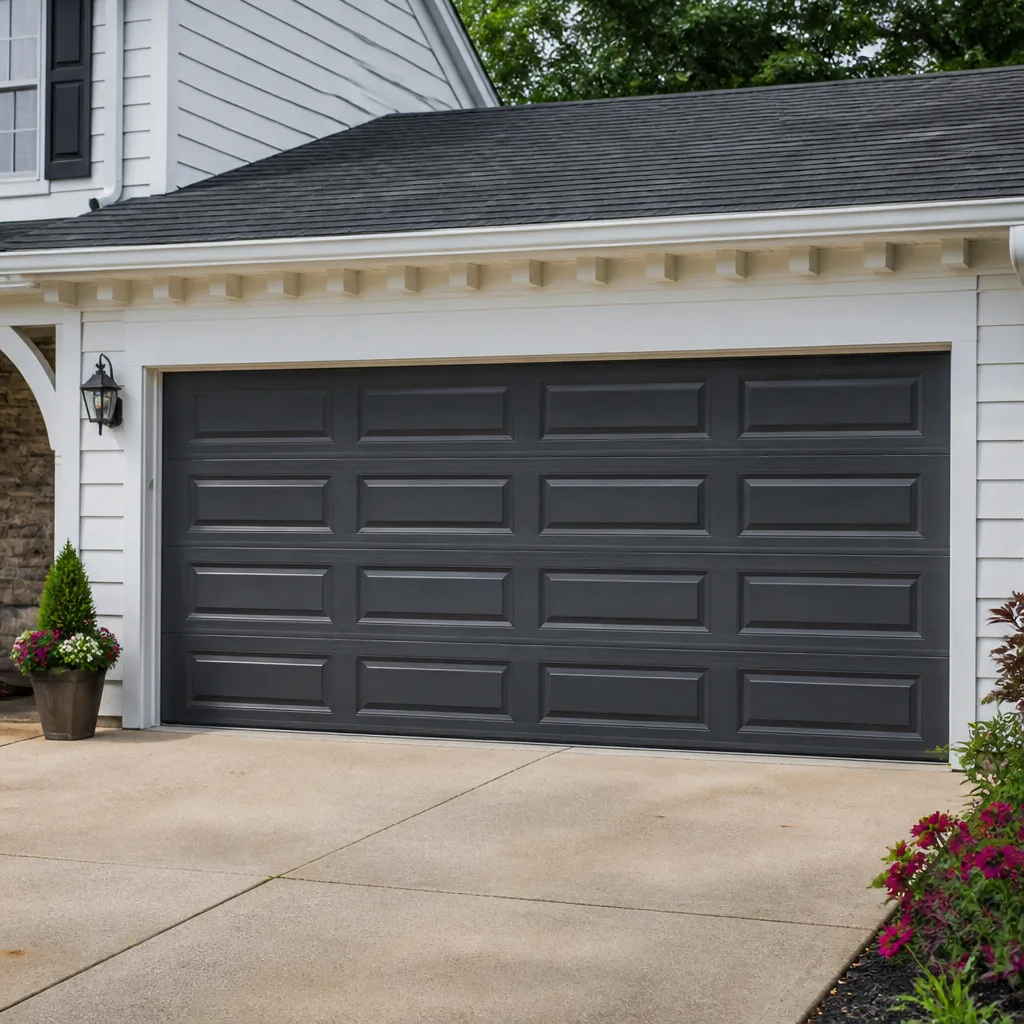 Raised-panel steel
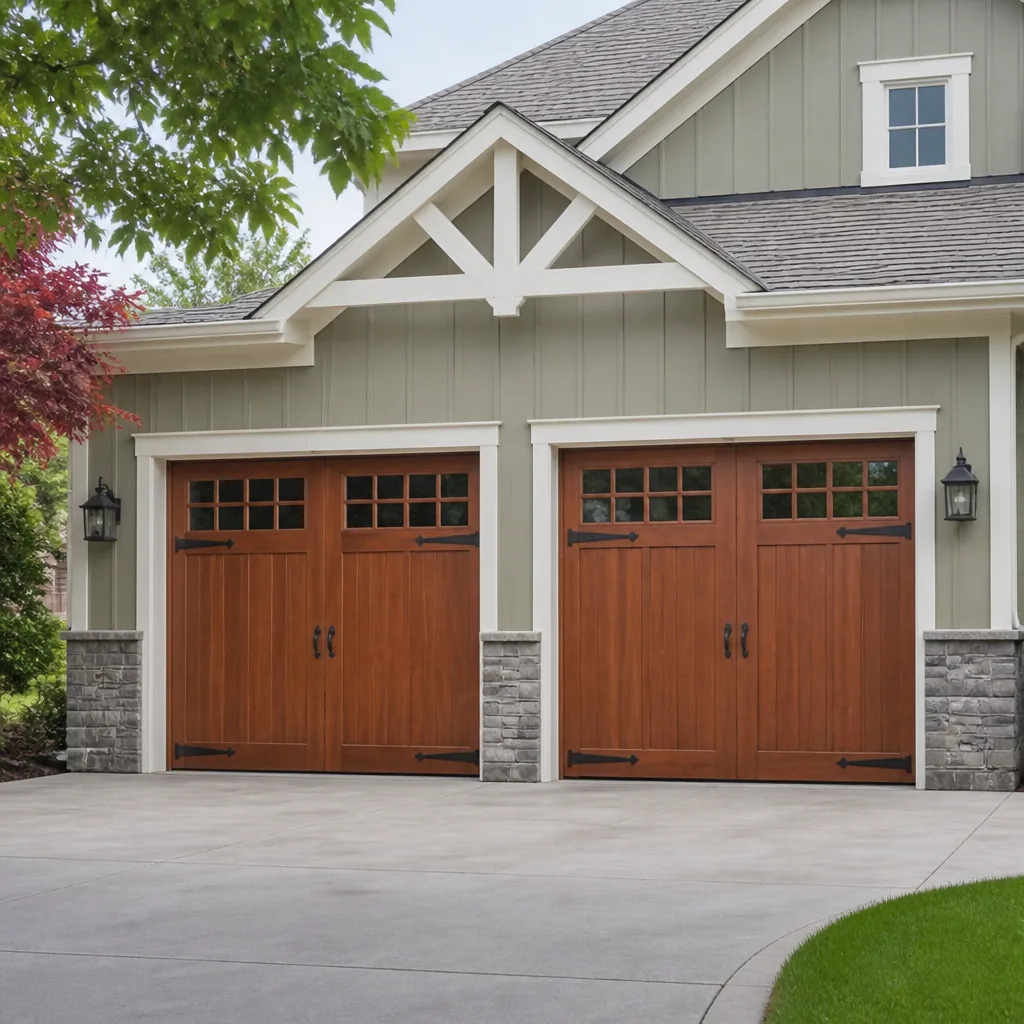 Carriage house
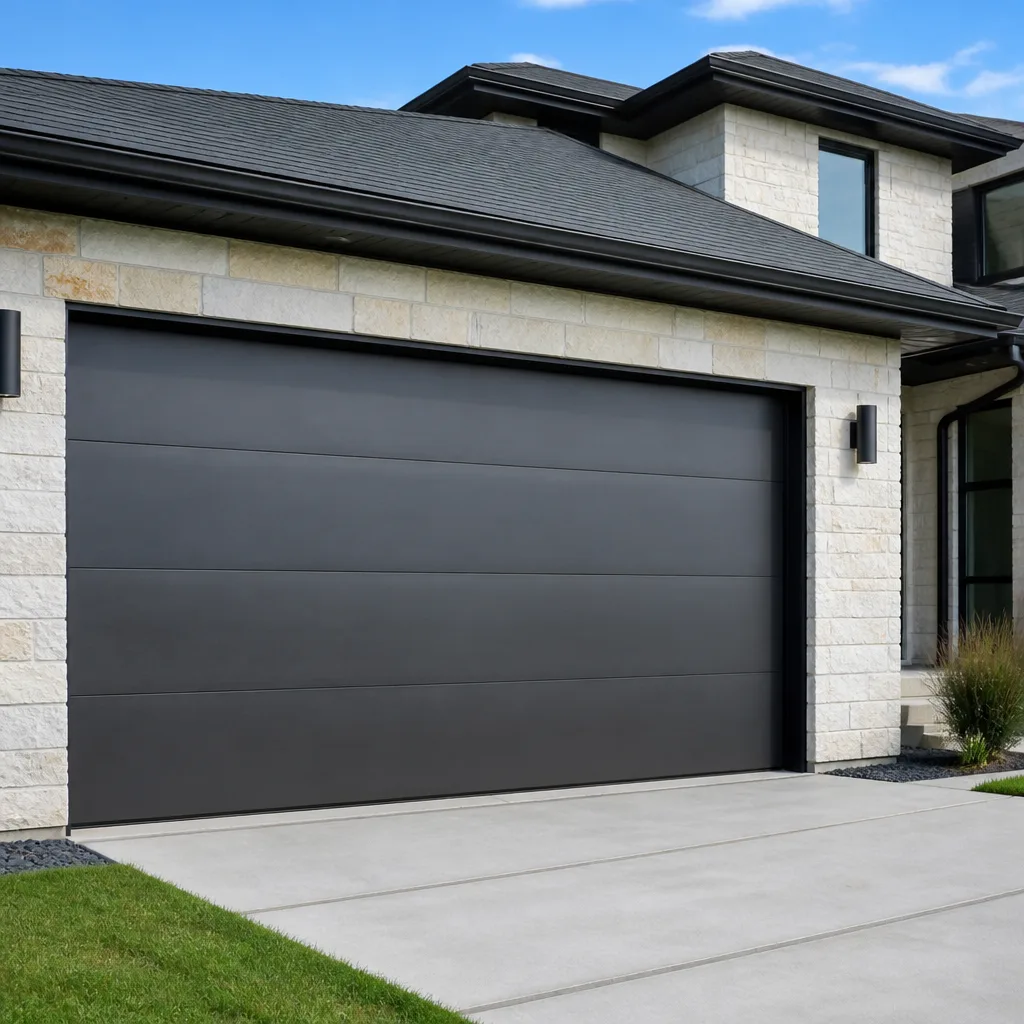 Modern flush
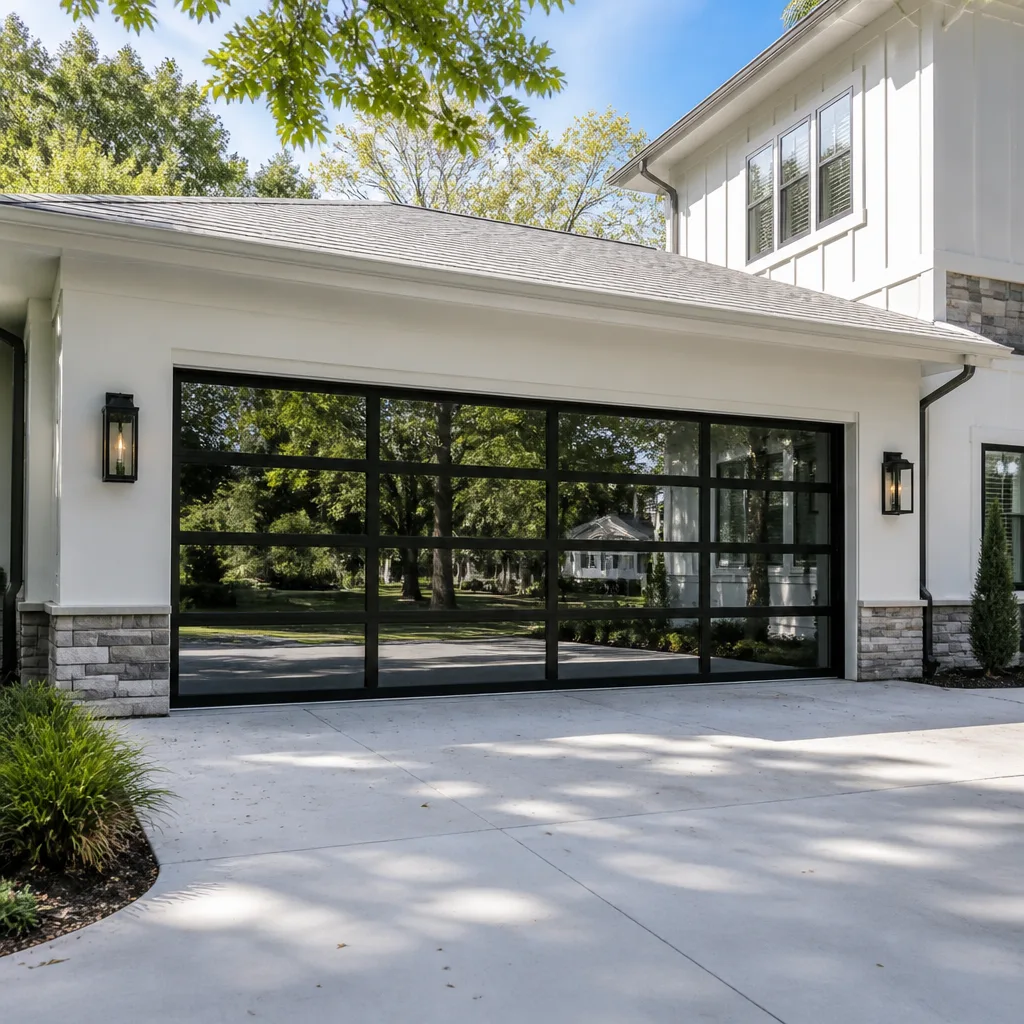 Full-view glass
 LiftMaster openers
 Chamberlain openers
Full 25-point door and opener safety check with every visit - springs, cables, rollers, tracks, and your LiftMaster or Chamberlain opener included
You get a price before we start. It does not change when the pro arrives.
Get your free estimateSeasonal Garage Door Care for Inwood: Year-Round Homeowner’s Guide
Most garage door advice tells you to “inspect your door twice a year” and leaves it there. That schedule treats every month the same, and in Inwood it just doesn’t work that way. The hardware on your door doesn’t wear out evenly. It takes its worst hits at a handful of predictable stress events: the freeze-thaw swings that arrive in late February, the humid August stretch that works on wood and wiring, and the fall storms that test every seal on the door. Miss those windows and you usually don’t find out until something breaks. Time your maintenance to the event instead of the calendar and a lot of emergency calls never happen. This guide walks through what’s actually stressing your door in Inwood, season by season, and the one task each season that pays off most.
Quick Answer
Seasonal garage door care in Inwood works best when it’s timed to stress events, not the calendar: pre-winter prep on springs, seals and the opener; a post-thaw inspection in late February and March; humidity checks on wood panels, tracks and opener boards in summer; and weatherstripping inspection ahead of fall storm season. The single highest-value habit is a short inspection after each of those events, plus a professional service once a year. One concrete task per season prevents most emergency calls.
Styles & brands we work with
- Raised-panel steel
- Carriage house
- Modern flush
- Full-view glass
- LiftMaster openers
- Chamberlain openers
Table of Contents
- Why Event Timing Beats a Fixed Schedule in Inwood
- Pre-Winter Prep: The Components That Fail in the Cold
- Late February and March: The Freeze-Thaw Test
- Summer Humidity: Wood Panels, Tracks and Opener Boards
- Fall Weatherstripping and Storm-Season Seals
- One Highest-Value Task Per Season
- What to Check and What to Leave Alone
- When to Call a Professional
Why Event Timing Beats a Fixed Schedule in Inwood
The standard “spring and fall” checkup assumes a mild, steady climate. Inwood’s seasons aren’t steady. They push the door through sharp transitions, and those transitions are what do damage. A garage door is a balance of stored energy (the springs), moving parts (rollers, hinges, the opener rail) and seals. Each one reacts differently to a temperature swing, and each one has a moment in the year when it’s most likely to fail.
Springs are the clearest example. A torsion spring holds constant tension, and when the temperature drops, the steel gets slightly more brittle. That’s why cold snaps are notorious for snapping springs. The door suddenly feels impossibly heavy, or the opener strains and stops. The cold itself didn’t cause the break; it just finished off a spring that was already near the end of its life.
Seals behave the opposite way. A bottom seal that’s pliable in September turns stiff and brittle after a cold stretch, and once it loses its give it stops sealing. That lets cold air and moisture under the door, and later you’re looking at a draft, a frozen threshold and a higher heating bill.
Tracking the calendar loosely is fine. Tracking the stress events is better. In our experience across Inwood, doors fail in clusters right after these events, not at some random point in the year. Plan around them and you’re working ahead of the problem instead of reacting to it. If a failure does catch you off guard, garage door repair is what we do, and emergency service exists for exactly those moments.
Pre-Winter Prep: The Components That Fail in the Cold
Before the first hard freeze settles in, the job is to get the door ready for a season that punishes anything already weakened. Three parts deserve the most attention: springs under tension, the bottom seal, and the opener’s ability to run in a cold garage.
1. Springs under tension
Springs are the most dangerous component in your garage door system, and they carry the full weight of the door. In the cold, a spring that’s been slowly losing tension is more likely to go. You can’t test a torsion spring by hand safely, so this is a professional check. What you should do at home is listen and watch: a door that’s gotten noisier, heavier to lift manually or slower to open is telling you something. Get it looked at before winter rather than after it breaks.
2. The bottom seal
Run your hand along the bottom seal (with the door closed) and press it. It should feel soft and springy. If it’s cracked, flattened or rock-hard, replace it before the cold locks it in. A seal that’s failing in the fall will fail completely in the winter, and the draft it lets in costs you all season.
3. Opener thermal performance
The opener motor operates in an unheated garage. When the temperature drops, the lubricant inside can thicken, and a door that’s already out of balance makes the opener work harder. A LiftMaster or Chamberlain unit, the two brands we most often see tied into smart-home setups, will usually send a warning through its app if it’s straining. Treat a stubborn opener in the cold as a symptom of a door that needs balancing, not a dying motor.
4. Tracks and rollers
Cold metal contracts and lubricant thickens. Any grit on the tracks or dry rollers will make the door move roughly. Wipe down the tracks and have moving parts lubricated before the season turns. If the door’s been dragging all year, this is the moment to fix it.
Late February and March: The Freeze-Thaw Test
Here’s the part most guides skip. Sustained cold is hard, but the freeze-thaw transition is harder. Through late February and into March, Inwood’s garage doors go through repeated cycles of freezing overnight and thawing by afternoon. Every one of those cycles works on the hardware. Metal expands and contracts, condensation forms and freezes, and everything that was tight in January is a little looser by March.
The first real thaw is a natural inspection point. After it, do a walk-around and check these specifically:
- The door’s balance. Disconnect the opener (pull the release) and lift the door halfway by hand. It should feel light and stay put. If it drops or feels heavy, the springs have lost tension through the winter.
- The bottom seal. Look for cracks or gaps after the thaw. Freeze-thaw is what splits a seal that seemed fine in December.
- The tracks. Check for any section that shifted or loosened. The repeated freeze and thaw can pull fasteners just enough to throw the door off line.
- Hinges and rollers. Listen as the door opens. Squeaks after a thaw are usually dry joints, but a grinding sound is a roller or track problem.
- The opener’s limit or force settings. If the door started reversing or stopping halfway after the thaw, the opener is reading resistance. Don’t just crank the force setting up; find out why the door is heavier.
This is where the seasonal logic really shows. The worst week of winter is over, so it’s tempting to relax. The thaw is actually when the damage from the winter becomes visible. A check now catches a weakened spring before summer, when a failure would be even more disruptive. In Inwood, March is a better month for garage door attention than October for exactly this reason.
Summer Humidity: Wood Panels, Tracks and Opener Boards
August brings a different set of stresses. Humidity and heat work slowly, which makes them easy to ignore. We’ve seen three areas where summer humidity in Inwood causes problems over time.
Wood door panels
A wood door, such as a classic Clopay or Amarr design, absorbs moisture through the summer. The wood swells slightly, panel joints open up, and any finish that’s wearing thin gives up its protection. Once water gets under the finish, the wood starts to move and the seams widen. The fix is a check for bubbling, peeling or soft spots, then recaulking any seams and resealing before the wet season ends. A polyurethane or stain finish on a wooden door is a seasonal task, not a once-and-done job.
Track alignment
Heat expands the metal tracks and the door itself. A track that’s slightly loose gets pulled out of alignment by that expansion, and you get a door that binds or rubs. Press gently on the tracks (with the door closed) and look for any section that’s moved from vertical. Binding in the summer is often a track issue, not a spring issue.
Opener circuit boards
An unventilated garage can get hot, and the opener’s circuit board sits up in that heat. Heat is hard on the electronics, and the small components on the board are the most vulnerable part. A Genie or Wayne Dalton opener that’s been reliable all winter can start acting erratic in August: lights flicker, remotes respond inconsistently, or the door won’t finish a cycle. Before you replace the opener, have the board checked. Sometimes a failing thermal element or a loose connection is the whole problem, and garage door opener repair solves it without a new unit.
Fall Weatherstripping and Storm-Season Seals
Fall is when the door’s tightness matters most, and it’s timed to storm season on the South Shore. Wind-driven rain finds every gap in a weather seal. A side seal that’s lost its seal, a top seal that’s pulled away, or a bottom rubber that’s gone stiff all become entry points when the season brings wind and rain.
The inspection is simple and worth doing before the first storm:
- Bottom seal: compress it with the door closed. It should push back. Cracks mean it needs replacing.
- Side seals (jamb seals): run your fingers down both sides. They should sit against the door with no daylight showing.
- Top seal: check that it’s still attached and making contact across the full width.
- Threshold: look for a gap at the floor, especially if the concrete has settled. A threshold seal may be needed.
- Drafts: on a windy day, stand inside and feel for air movement around the edges.
Replacing weatherstripping is one of the least expensive things you can do to a door, and in Inwood it pays off all winter in heating and all fall in water intrusion. Once the storms start, gaps you ignored in September turn into wet floors and swollen doors by November.
One Highest-Value Task Per Season
If you only do one thing each season, do the task that prevents the most likely emergency. Here’s the short version, front-loaded to the local stress events.
- Fall (pre-winter prep): Check the bottom seal and get the springs inspected by a professional. A failing seal and a weakening spring are the two most common winter failure points.
- Late winter (post-thaw): Do the manual door lift test after the first real thaw. It’s the fastest way to find a spring that lost tension, before it drops the door.
- Summer: Check the door’s balance and tracks for heat-related misalignment. This is the season when binding starts, and an unaddressed bind strains the opener.
- Fall (storm season): Replace any weatherstripping that’s cracked or gapping. It’s cheap, and it’s the biggest barrier against water and wind.
Notice the pattern: two of the four highest-value tasks land in the late-winter and fall windows, which is exactly why this calendar front-loads there. If a new door is on the horizon rather than a repair, the same seasonal logic applies to timing garage door installation: measure and schedule in summer or early fall, when the weather is stable and installation isn’t fighting a hard freeze.
What to Check and What to Leave Alone
Some seasonal tasks are fine for a homeowner. Others are genuinely dangerous, and springs are at the top of that list. A torsion spring or a garage door cable is under heavy tension. If it’s released wrong, it can cause serious injury. We handle springs directly for that reason, and we’d rather you check the safety items and call us for the rest.
Safe to check yourself:
- Whether the door is balanced (the manual lift test).
- The condition of the bottom, side and top seals.
- Whether the tracks look loose or out of alignment.
- Lubrication of rollers and hinges (use a garage door lubricant, not a household oil).
- Whether the opener’s safety reverse works (test with a small object on the floor).
Leave to a trained professional:
- Adjusting or replacing torsion or extension springs.
- Working on the cables, drums or any part under tension.
- Replacing the opener or its wiring.
- Realigning tracks that have come loose or bent.
Our technicians have up to 12 years of experience with these systems, and a big part of that experience is knowing when a “small adjustment” is actually a safety job. If a spring or cable is involved, don’t touch it.
When to Call a Professional
Not every check should end with a phone call. Some should. Call a professional if the door feels heavy when you lift it by hand, if the opener struggles to open a door that used to open easily, if you see cracks in the springs or fraying on the cables, if the door won’t stay in the tracks or reverses unexpectedly, or if the seals are failing and you want them replaced correctly. Spring repair in particular is a dedicated job, not a general handyman task, and it’s the one most worth getting right.
Garage Door Repair Inwood offers free estimates in Inwood. Call (877) 584-3370 and we’ll look at the door, tell you what’s actually failing and quote it clearly before any work starts. The estimate is free and the price is agreed up front, so there’s no surprise when the job’s done.
Common Mistakes to Avoid
- Treating spring and fall as the only checkpoints. In Inwood, the late-February thaw matters as much as October. Skipping the post-thaw check is how a weakened spring goes unnoticed until it breaks.
- Cranking up the opener’s force setting to get a heavy door moving. That force setting is a safety limit. If the door’s getting heavy, the door is the problem, not the opener.
- Ignoring a stiff or cracked bottom seal until winter. By then the cold has locked the gap into place, and the draft it lets in runs all season.
- Using household oil on the tracks and rollers. It attracts grit and gums up in cold weather. Use a proper garage door lubricant.
- Assuming the opener is dead when it’s erratic in summer. Heat is hard on the circuit board, and a board or connection issue often gets solved without a new opener unit.
- Doing spring work yourself to save a call. Springs are under heavy tension, and this is the single most dangerous garage door job there is. A trained professional should handle it.
- Overlooking wood door maintenance until the panels swell. A wood door in Inwood’s summer humidity needs its finish kept up, or the panel joints and seams start to open.
See the difference
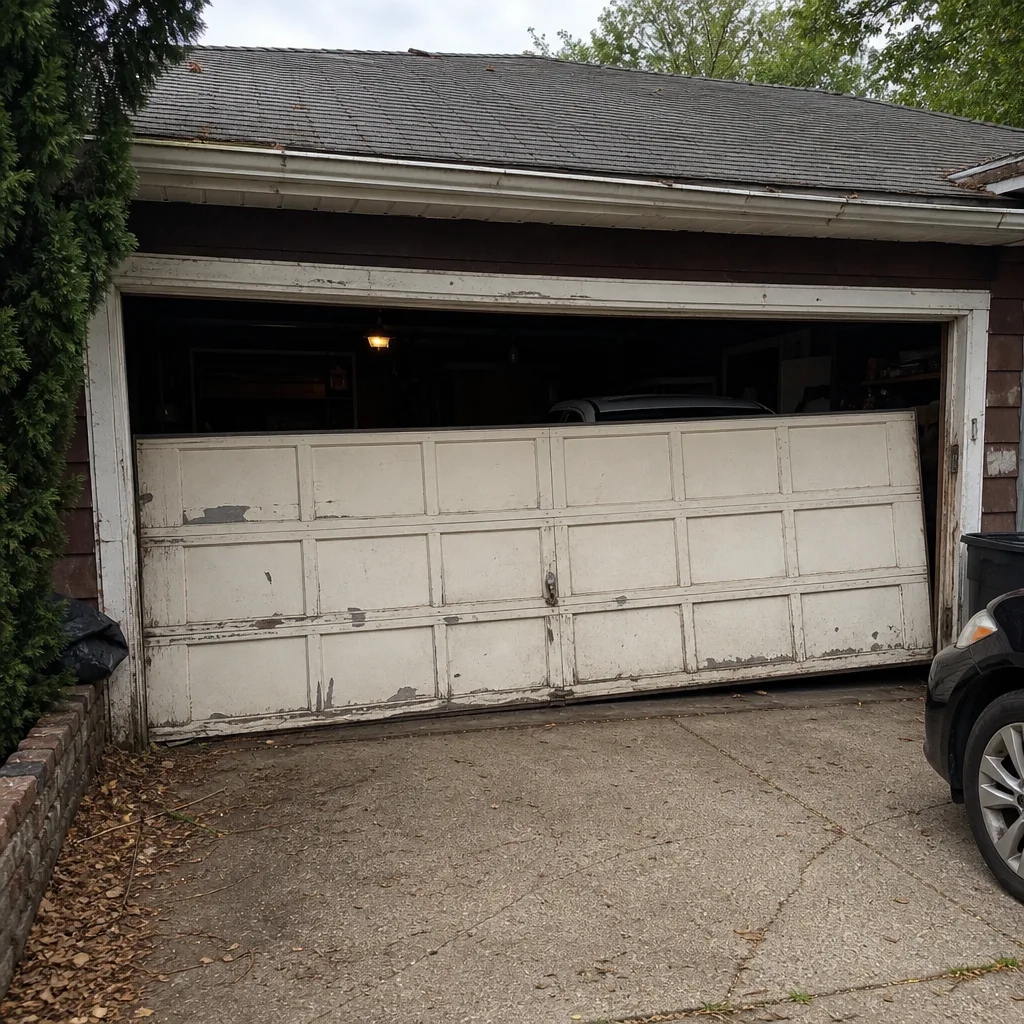 Before
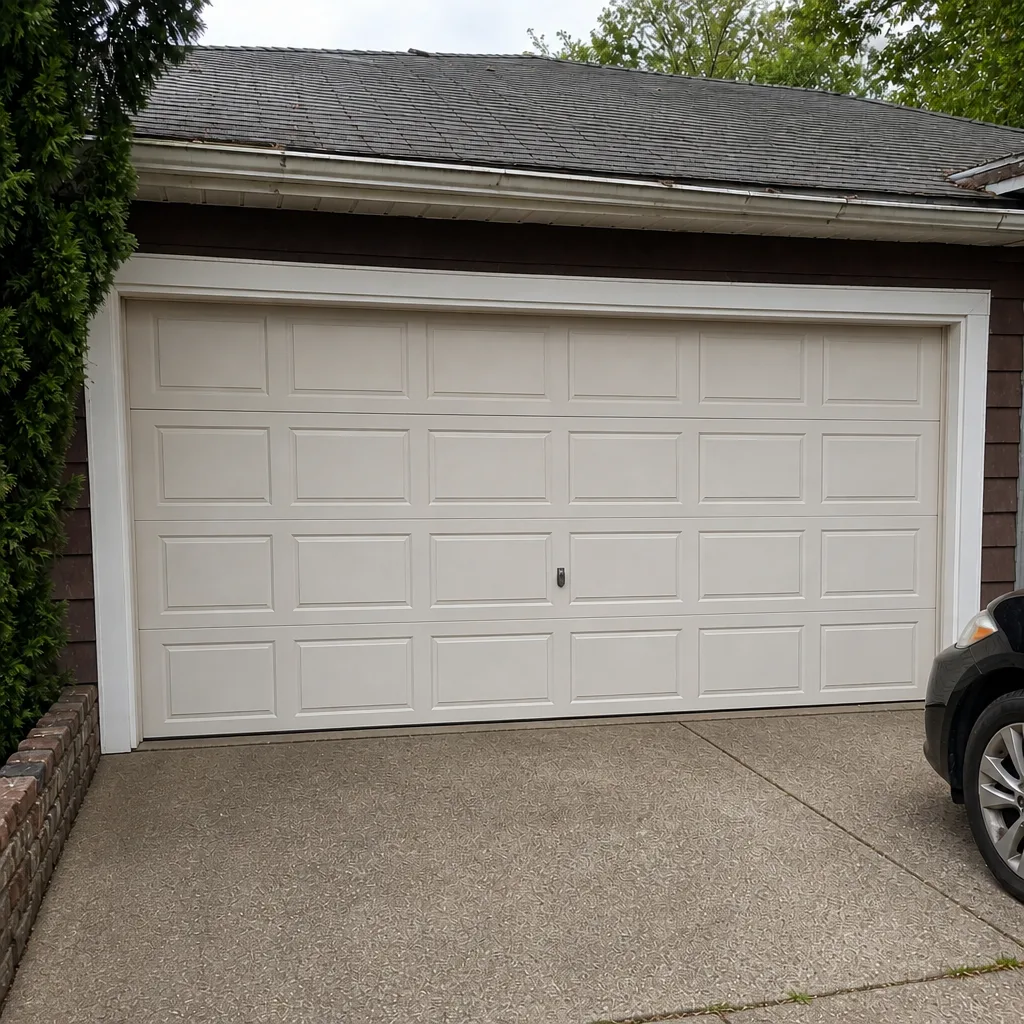 After
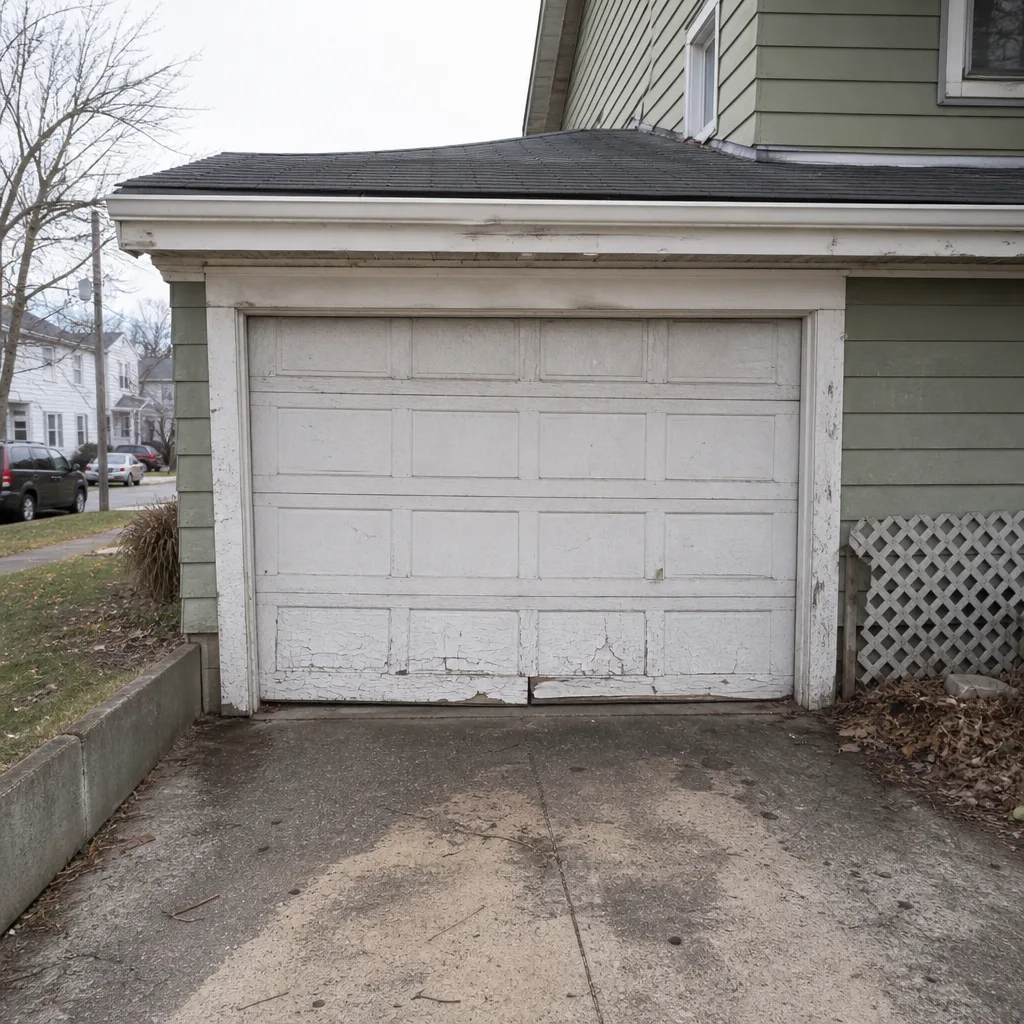 Before
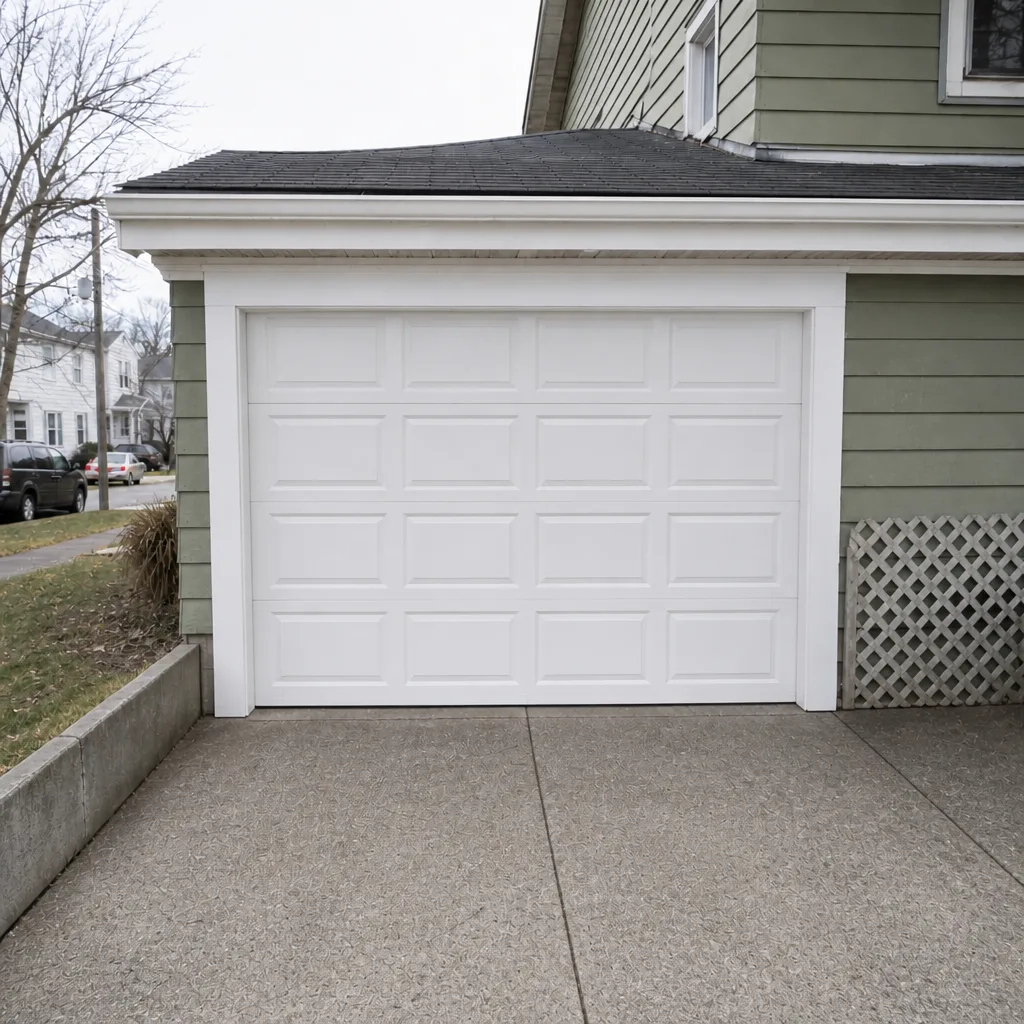 After
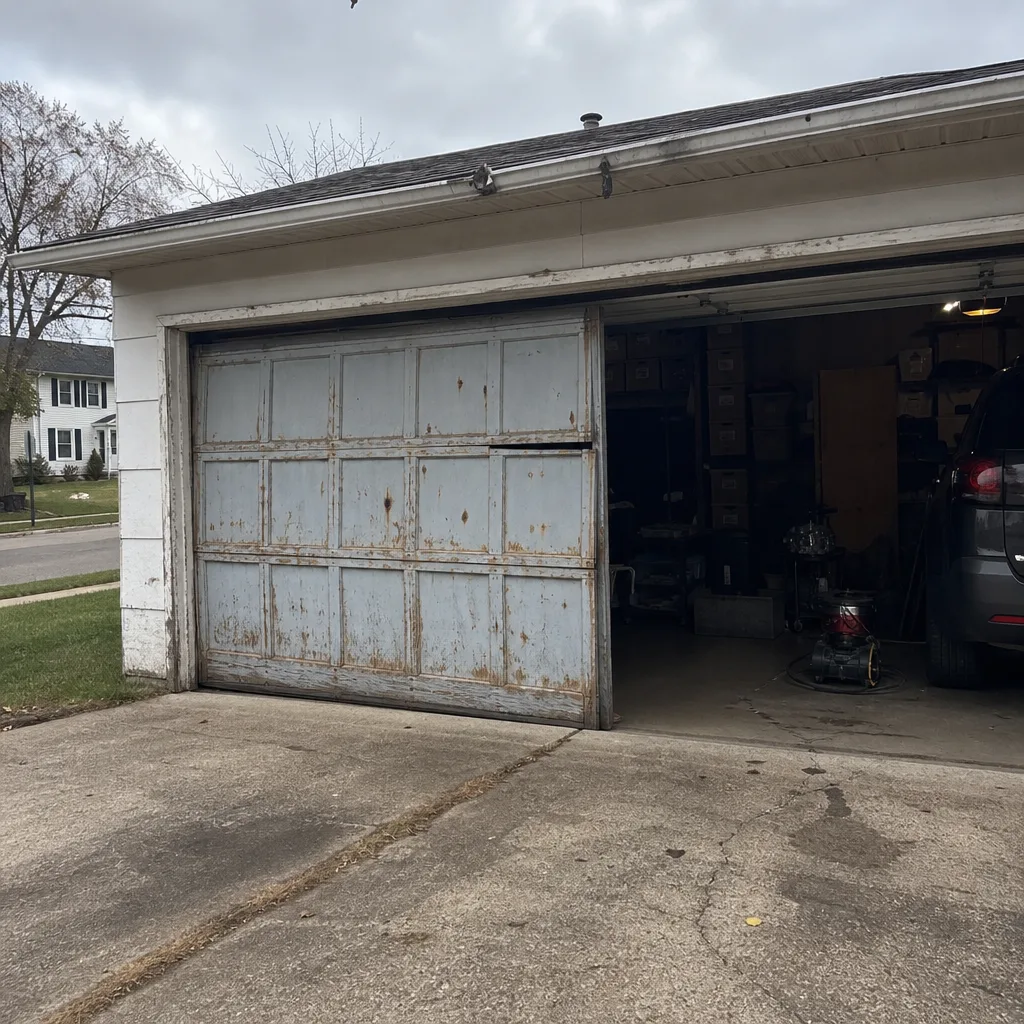 Before
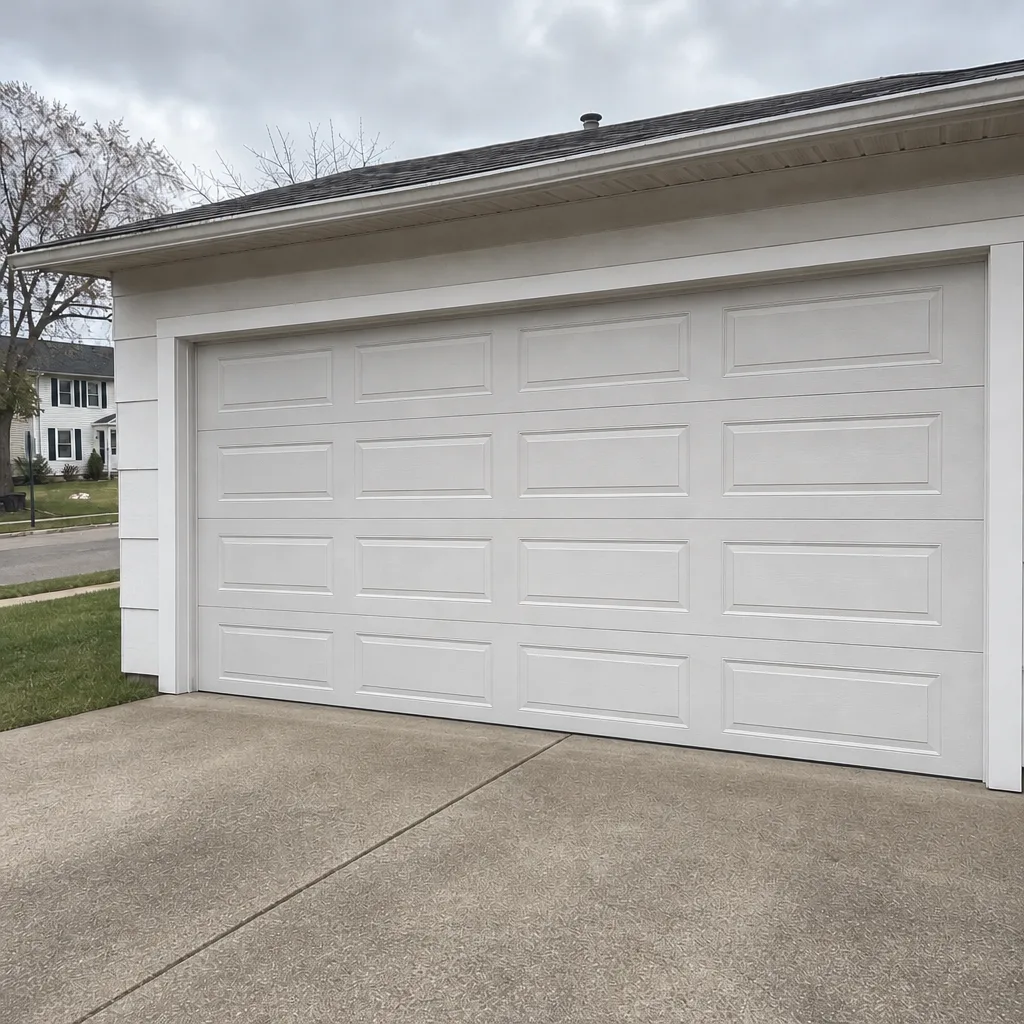 After
Frequently Asked Questions
Once a year is the baseline, but a short DIY inspection after each seasonal stress event (late-February thaw, mid-summer humidity stretch, fall storm season) catches most problems earlier. The yearly professional service and the after-event checks work together.
Yes. The humidity absorbs into wood panels, so a wood door (Clopay and Amarr are common wood-look designs) needs a check each summer for bubbling, peeling or soft spots, plus resealing on roughly a seasonal schedule. Keep that up and the door’s panels and seams hold their shape.
Heat is the main reason. A garage that gets hot in August stresses the opener’s circuit board, and small electrical components are the first to act erratically. Get the board checked before assuming the opener needs replacing; a thermal element or loose connection is often the whole problem.
No. Springs are the most dangerous component in the garage door system, and they’re under heavy tension. Replacing a torsion or extension spring without the right tools and training is a serious injury risk. This is a job for a trained professional.
Emergency service is a core part of what we offer, so call (877) 584-3370 and we’ll work you in. We don’t promise a specific time, but a broken spring or a stuck door in the cold isn’t something to sit on. Estimates are free.
We work on the brands most Inwood homeowners already own, including LiftMaster and Chamberlain for smart-home integrated systems, plus Genie, Clopay, Amarr, Wayne Dalton, Craftsman and Raynor across doors and openers. If you’re not sure what you have, a photo of the unit is usually enough to identify it.
The Bottom Line
Seasonal garage door care in Inwood works best when it’s timed to the events that actually stress the hardware, not to a generic twice-a-year schedule. The late-February thaw and the August humidity are the two windows where a short inspection catches the most. Springs, seals, tracks and openers each fail at a different point in the year. One task per season, plus a yearly professional check and the discipline to leave spring and cable work alone, will prevent most of the calls you’d rather not make. When something does need a professional, we’re a call away.
If your door is showing any of the warning signs in this guide, or you’d like a professional look before the next season turns, call Garage Door Repair Inwood at (877) 584-3370 for a free estimate. We’ll inspect the door, tell you exactly what’s going on, and quote a price that’s agreed before work begins. Whether it’s a repair, a new door or a tune-up, one call covers it. You can also start with our Garage Door Repair Inwood page to see the full range of what we do.
Written by the team at Garage Door Repair Inwood.